Project Overview
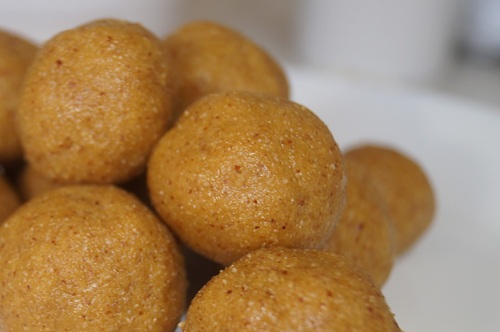
The Enhancement of Production Process and Quality of Kuli-Kuli and Dakuwa Snacks project is a collaborative research and development initiative aimed at upgrading traditional snack processing technologies in Nigeria. The project focuses on the mechanization, standardization, and optimization of Kuli-Kuli (groundnut cake) and Dakuwa (groundnut–cereal-based snack) production to improve efficiency, hygiene, product consistency, and market competitiveness.
Recognizing the economic potential of these popular indigenous snacks in rural and urban food systems, RMRDC, in partnership with the Department of Agricultural Engineering, Federal University of Technology, Minna, embarked on this project to bridge the gap between artisanal processing and small-scale industrial production. The initiative promotes food safety, product quality, and value addition, thereby contributing to job creation and local enterprise development.
Timeline & Location
Timeline: July 2022 – Ongoing
Location: Department of Agricultural Engineering, Federal University of Technology, Minna
Current Status: 95% completed — prototype machines fabricated and tested; final commissioning and commercialization preparation in progress.
Objectives
Design, fabricate, and test improved processing machines for Dakuwa and Kuli-Kuli production to increase efficiency and ensure uniform product quality.
Evaluate traditional production methods to identify critical control points and areas where technological intervention can improve yield, hygiene, and safety.
Assess the impact of improved processing on nutritional composition, texture, taste, and overall sensory acceptability.
Conduct shelf-life studies to determine the best preservation techniques and suitable packaging materials for prolonged freshness and marketability.
Perform economic analysis to estimate production costs, profitability, and return on investment for the improved processing system.
Project Team & Collaboration
RMRDC – Project coordination, funding, and technology dissemination.
Department of Agricultural Engineering, Federal University of Technology, Minna – Design, fabrication, testing, and process optimization.
Local Fabricators and Processors – Validation of equipment usability and feedback on practical operation.
Food Science Experts – Nutritional and quality analysis, shelf-life and packaging studies.
Key Activities and Achievements
Completed:
Comprehensive assessment of traditional Dakuwa and Kuli-Kuli production processes and identification of inefficiencies.
Conceptual and technical design of processing machines (roaster, grinder, mixer, oil expeller, and molder).
Fabrication of improved prototypes using locally available materials.
Initial testing and optimization of machine performance parameters (capacity, efficiency, and safety).
Nutritional and sensory analysis confirming improvement in product consistency, flavour, and hygienic standards.
Shelf-life study and preliminary selection of suitable packaging materials (laminated pouches and vacuum-sealed options).
Economic feasibility assessment indicating a favorable return on investment (ROI) for small and medium-scale processors.
In Progress:
Final pilot testing and validation with local processors under field conditions.
Documentation of design specifications, standard operating procedures (SOPs), and user manuals.
Preparation for technology transfer and commercialization.
Expected Deliverables
Fully functional prototype processing units for Kuli-Kuli and Dakuwa production.
Technical and economic reports on production efficiency, product quality, and ROI.
Standardized process guidelines and SOPs for commercial adaptation.
Training manuals and dissemination materials for local entrepreneurs and cooperatives.
Demonstration and commercialization plan for deployment in agro-processing clusters.
Socio-Economic and Industrial Impact
Value Addition: Improves quality, consistency, and packaging of indigenous snacks, enhancing market competitiveness.
Employment Generation: Creates new opportunities for local fabricators, processors, and small-scale entrepreneurs.
Food Safety & Quality: Enhances hygiene, reduces contamination risks, and ensures nutritional integrity.
Import Substitution: Reduces dependence on imported snack-processing equipment.
Economic Empowerment: Strengthens small agro-processing enterprises, especially among women and youth.
Next Steps
Complete final commissioning and pilot demonstration at FUT Minna.
Launch a technology dissemination workshop for SMEs and cooperatives.
Facilitate local fabrication and commercialization through RMRDC’s technology transfer mechanism.
Establish production clusters in major groundnut-producing states to scale the adoption of the improved processing line.